Ribbons!

Today is primary election day in New Jersey, and because this state has not elected a Republican to fill a US Senate seat in practically my lifetime, most of the media attention fell on the “county line” issue, the propriety of a governor’s wife running, and Congressman Andy Kim. As it should have. The GOP contest generated few headlines but no small number of mailers. The race simply did not attract a high quality candidate with any name recognition. Monmouth reported that in March, the “favorables” and “unfavorables” for all the candidates was in the single digits while the “who the hell is that” column was 80% or higher. Republican primary voters could be forgiven for low turnout today. My veterans-in-politics sniffer got tickled by one candidate, however.

Albert Harshaw, who wasn’t even included on the Monmouth poll list, caught my eye as a US Navy veteran running in the race. His campaign website, like most of them, has a few tabs. “Issues,” “Donate,” and the usuals are all there. But there is also one for “Military Awards,” which I’ve screenshotted for fear that the website will disappear tomorrow. (In case it stays up, here’s the link.)

I’ve seen quite a few military vets run for office, but I don’t recall ever seeing a raw ribbon dump so explicit. Oh, and no disclaimer, either!

Some Southern National Guard units hanging on to confederate battle streamers

Saw in Military.com (via @StevenBeynon) that some but not all of the National Guard units in some but not all of the formerly confederate states failed to ditch Confederate-era battle streamers. These are not the stars and bars but rather commemorations of participation in specific campaigns or battles.

South Carolina units are among those who have failed to toe this federal line, and that seems very on brand for them. A total of 107 appear to be missing. If you see them, call the US Army Center of Military History or your congressman or somebody.

NYT Headline: Not all Kennedys conspiracy-theory-spinners

As of late summer 2023, the presidential campaign of Robert F. Kennedy Jr. has collected journalistic profile after journalistic profile, most of them justifiably unflattering given the man believes the CIA was involved in his uncle’s assassination along with the more recent and routine anti-vax rhetoric (though his anti-vax bona fides go back before the coronavirus pandemic). It’s not a huge surprise to see that his poll numbers drop from their original lows.

But RFKJr is not the only Kennedy around. Ambassador Caroline Kennedy got some ink in the Times today with a jaunty piece by Damien Cave. Cave traveled with Kennedy to the remote Pacific islands where John Kennedy’s ordeal took place after the sinking of his PT-109 during World War II in 1943. Apparently you too can visit, but the remote location means you’ll probably need to do more planning than open up your airline booking app.

Illustration from JFK library

Caroline Kennedy’s visit included her swimming a leg of JFK’s various swims after the sinking to ferry men and get help. If for the visuals alone, it’s worth a read for anyone interested in that chapter of WWII and/or anyone wanting a lift after experiencing understandable Kennedy fatigue from her cousin.

Tired: Using veterans as political props. Worse: Using deceased ones.

A Harold Earls (R-GA) is apparently seeking a congressional seat and has done what hundreds of candidates with military service have: he ran an digital ad that focused on his military service. He was commander of the guard at the Tomb of the Unknown Soldier.

The bad news: he emphasized this service by using imagery from Arlington. Way too much of it. (And also a freshly birthed baby.)

Trying to advance your political career by using imagery from the holiest of holies for just the sort of people with whom Earls was probably trying to connect is not likely to be a winner. It’s probably technically legal, but it is also both ethically and strategically unwise.

For Frank’s Sake: Don’t use military logos as your congressional return address

Seal of the United States Marine Corps

You know you’re having a bad day when the United States Marine Corps sends you a cease and desist letter.

GOP Representative Duncan Hunter (CA-50), already feeling heat with regard to alleged extramarital affairs paid for with campaign funds, got legal word from the USMC to stop putting its logo on his mailers. An early Trump fan, he was jumping on the anti-Ilhan Omar (MN-05), anti-Rashida Tlaib (MI-13) bandwagon with a recent mailer attacking his own challenger, Ammar Campa-Najjar. Hunter is certainly an OIF and OEF veteran. He was an artillery officer, having been commissioned around 2002. We talk about the intersection of military service and electoral politics around here–and this situation is some eyebrow-raising overlap.

Here’s Briget Naso’s tweet with an image of the envelope:


h/t to Eli Rosenberg’s WaPo article

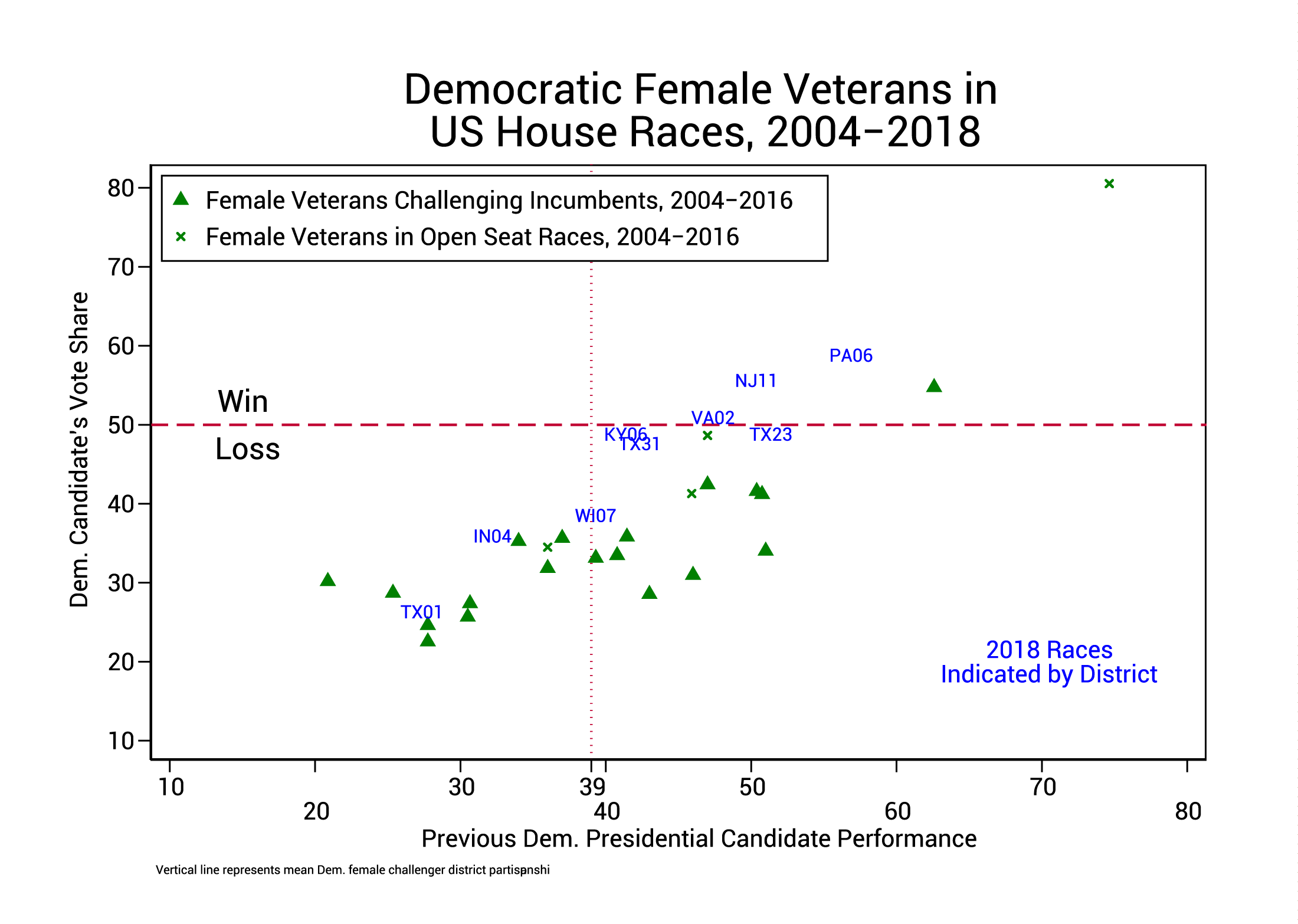
More Democratic female vets ran in 2018 US House races than ever and in more favorable districts

Here’s a visualization of all the Democratic women with military experience who have ran as challengers against Republican incumbents and in open seats since 2004. Best_Teigen_FemaleVets2018Scatterplot

This cycle not only featured more than ever with nine (outside of Louisiana, California, and Washington, which have peculiar systems), they emerged in more winnable districts. (Link back to article)

John McCain over Hanoi

My book, Why Veterans Run, describes the political paths of the presidential candidates who served in the armed forces. John McCain features prominently. His passing last week, complicated by the steady antagonist treatment he received from President Trump, should be discussed not only as a moment in the Trump administration, but also on its own terms.

I wrote quite a bit about him in chapter eight on the Vietnam War veterans, along with the others (John Kerry and Al Gore). Here is an excerpt, relating to the day in October, 1967 when he was shot down over Hanoi:

…After his education at the U.S. Naval Academy, McCain became an aviator and piloted carrier-based A-4 Skyhawks. These single-seat small planes were used during the Vietnam War as fast, light bombers. For his twenty-third bombing mission, McCain flew with his squadron to attack a power station in North Vietnam’s capital, Hanoi, in October 1967. McCain watched the radar tracking alarm light up, signaling a likely incoming surface-to-air missile (SAM); engaged countermeasures; and then dove and dropped his payload. After dropping his bombs, his plane’s wing was destroyed by the SAM, forcing McCain to eject over hostile territory. Ejecting from a small combat aircraft even when not in hostile conditions is dangerous. The process to push the pilot from the aircraft uses controlled explosives to quickly launch the seat from the cockpit—the intention being to save the life without excessive concern for the limbs. McCain’s arms and legs were severely injured by the ejection. While he survived and landed in a lake, he sustained many injuries and broken bones that were made worse by the crowd that pulled him from the water and beat him, as well as neglect and abuse by his captors.

180825-N-NO101-003


When he first ran for Congress in 1982, he “deflected carpetbagger accusations” with the following memorable line:

I wish I could have had the luxury, like you, of growing up and living and spending my entire life in a nice place like the First District of Arizona, but I was doing other things. As a matter of fact, when I think about it now, the place I lived longest in my life was Hanoi.

(photo via US Navy)

Pro tip: don’t compare military service to anything

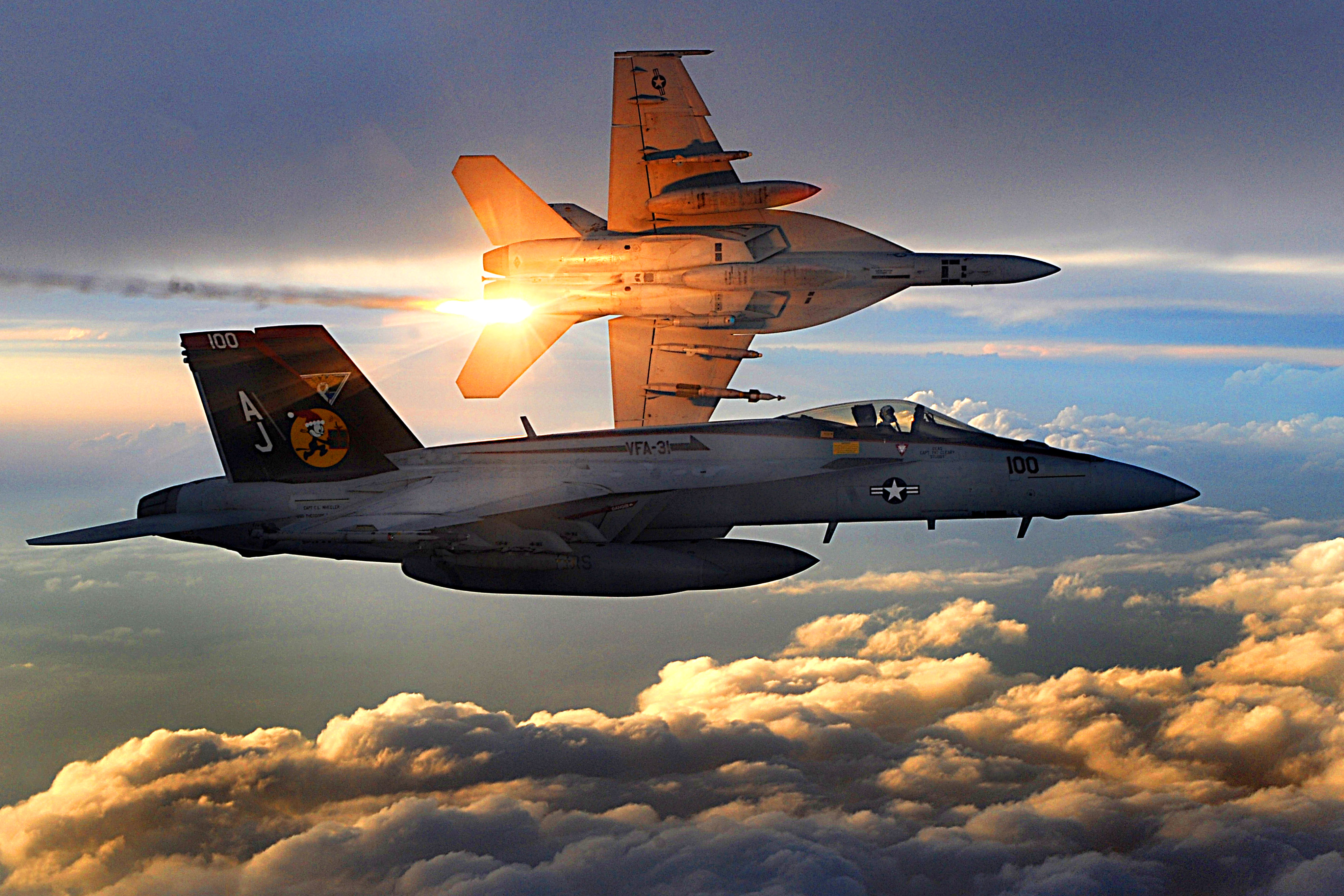
There is a lot of attention on the congressional race in Kentucky’s sixth where one of the several female Democrats with military experience is challenging a nonveteran GOP incumbent. Congressman Andy Barr made an unforced error when he appeared to some to put his time in Congress somehow as equivalent to challenger Amy McGrath’s time flying F/A-18s in combat over Iraq and Afghanistan. Details of what he actually said can be found here, but this just looks like a freshman error for someone trying to remain in office. Remember when Mitt Romney tried to convey that the time his sons were spending helping him try to win the presidency was somehow tantamount to serving in the armed forces? That only put more light on the sons’ (and Romney’s) lack of service.

Enduring Freedom

Why does it seem like this was an really easy one to avoid? McGrath’s service is vividly central in her campaign biography, maybe more so than the other vets running. Even down to the last detail: her campaign website’s favicon is a little blue outline of an F/A-18.

Photo credit.

Vets and flags

While reporting by Arun Venugopal seems to suggest that flying an American flag is “intimidating” for some viewers (not sure about that one), another headline about flags caught my eye.


Steve Watkins is running for a US House seat, seeking to replace a retiring GOP member in a red district in Kansas. The primary is in August, which will choose one of the many Republicans to probably win in November—Trump won this area handily. Watkins is using an art display to generate some free media that focuses on his own military service. Watkins makes his experience as a part of the Long Gray Line and time as a Captain in the Army in Afghanistan very central in his own campaign biography.

Apparently, a “public art project” at the University of Kansas entitled “Pledges of Allegiance” commissioned artists to add images to American flags. The example that piqued Watkins’ ire features two dark splotches near the center of the flag. The museum tweeted a response the the criticism that others began to echo after Watkins that says it’s all about a polarized America:

(photo credit to Roger Sayles)